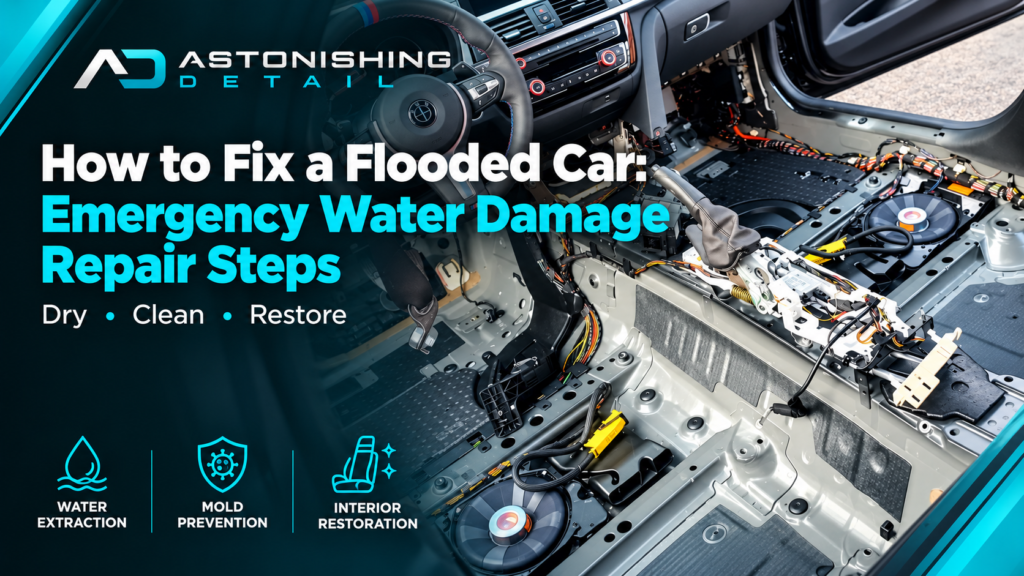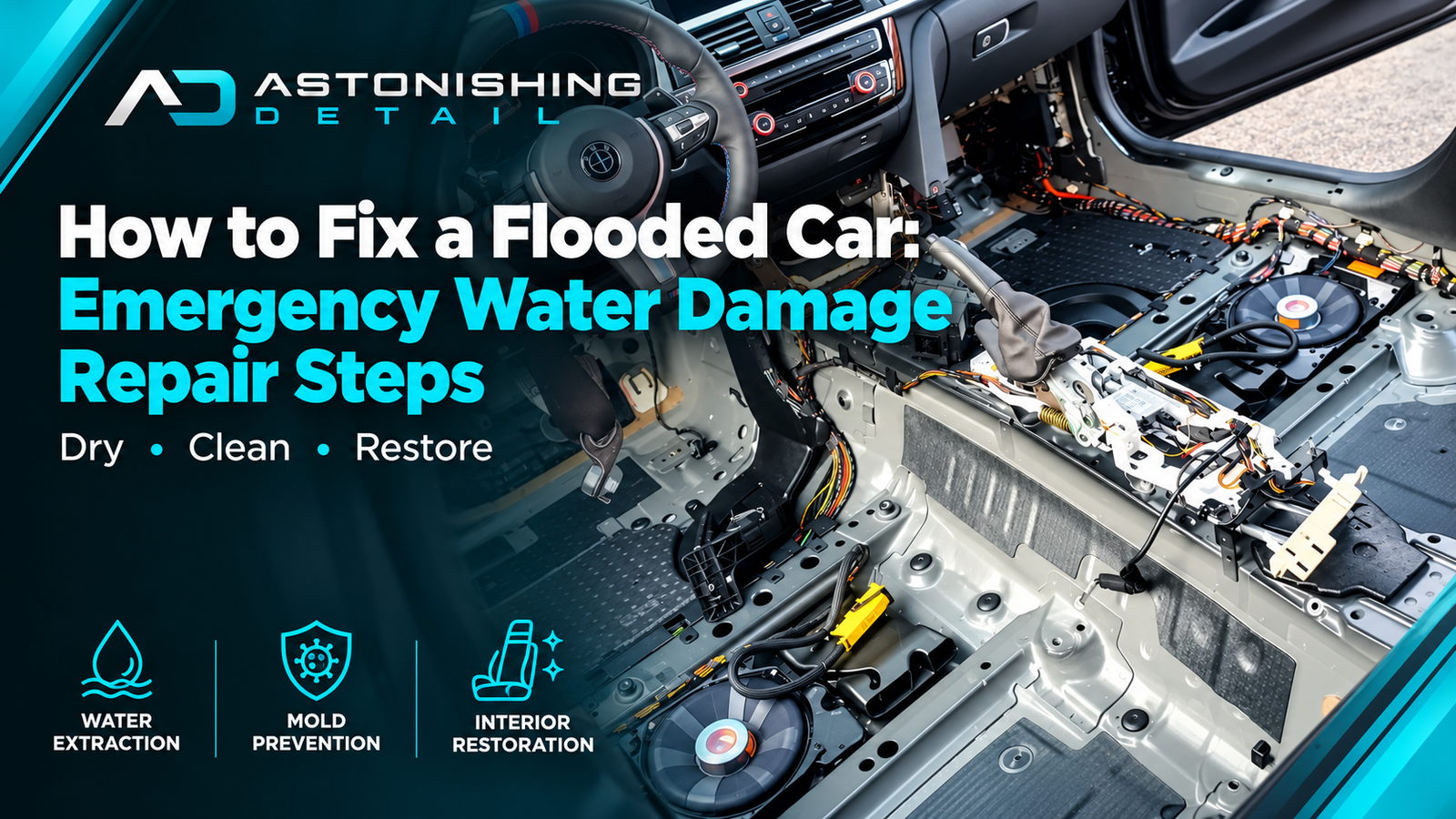
A flooded car can quickly develop serious problems if water is not removed properly. Moisture can soak into carpets, seats, padding, wiring, and hidden areas, leading to odors, mold, corrosion, and electrical issues.
If water gets inside your vehicle, acting quickly is important.
This guide explains how to fix a flooded car, the first emergency steps to take, and when professional car water damage repair may be necessary.
What Should You Do First After Your Car Floods?
The first step is to determine how serious the flooding is.
If the vehicle was partially or fully submerged, do not start the engine until it has been professionally inspected. Water may have entered the intake, engine, or electrical system.
For minor interior water damage, begin removing moisture as soon as possible.
| Situation | What to Do |
|---|---|
| Wet carpet or floor mats | Remove water and begin drying |
| Soaked seats | Extract moisture and deep clean |
| Water near electrical components | Avoid using electronics until inspected |
| Vehicle was submerged | Do not start it; arrange professional inspection |
| Musty smell after flooding | Check for trapped moisture and mold |
Step 1: Remove Standing Water
Start by removing as much visible water as possible.
Depending on the amount of water, you may need:
- Wet/dry vacuum
- Water extraction equipment
- Towels
- Professional automotive extractor
Do not rely only on air drying because moisture often stays trapped beneath the carpet.
Step 2: Remove Floor Mats and Check the Carpet
Take out all floor mats and inspect the carpet carefully.
Check:
- Driver and passenger floors
- Rear footwells
- Under the seats
- Trunk or cargo area
- Spare tire compartment
Even if the top of the carpet feels dry, the padding underneath may still be soaked.
Step 3: Extract Water From Carpet and Upholstery
Wet carpet padding can hold moisture for a long time.
If it is not properly dried, it may lead to:
- Mold
- Mildew
- Bad odors
- Bacterial buildup
- Corrosion underneath the carpet
Seats and upholstery should also be extracted and cleaned if they are heavily wet.
Step 4: Clean and Sanitize the Interior
Floodwater can carry dirt, bacteria, and contaminants into the vehicle.
Affected areas may include:
- Carpets
- Seats
- Door panels
- Floor mats
- Plastic trim
- Center console
- Trunk area
Deep cleaning helps remove contamination and reduce unpleasant odors.
Step 5: Dry Hidden Areas Thoroughly
Water can remain underneath seats, carpets, trim panels, and insulation.
Fans, air movers, ventilation, and professional drying equipment can help remove hidden moisture.
The goal is not just to make the surface feel dry. The material underneath also needs to be fully dried.
Step 6: Check for Electrical Problems
Water damage may affect wiring, sensors, switches, and electronic modules.
Watch for:
- Warning lights
- Power window problems
- Infotainment issues
- Battery drain
- Seat control problems
- Flickering lights
- Strange electrical behavior
If water reached electrical components, have the vehicle inspected.
Step 7: Check for Mold and Odors
A musty smell after flooding usually means moisture may still be trapped somewhere.
Signs of mold or mildew may include:
- Persistent damp smell
- Discoloration
- Spots on carpet or upholstery
- Odors returning after cleaning
Professional water damage detailing can help locate and treat these areas.
What Not to Do With a Flooded Car
Avoid these common mistakes:
- Do not start a deeply flooded vehicle immediately.
- Do not assume the carpet is dry just because the surface feels dry.
- Do not close the car while the interior is still wet.
- Do not ignore electrical warning signs.
- Do not cover odors with air fresheners without fixing the source.
Can a Flooded Car Be Saved?
Yes, depending on the severity of the damage.
Minor rainwater intrusion may only require extraction, deep cleaning, and drying.
More serious flooding may involve:
- Electrical systems
- Engine components
- Wiring
- Sensors
- Interior materials
- Transmission components
Severely flooded vehicles should always be professionally assessed.
How Serious Is the Water Damage?
| Damage Level | Typical Condition | Recommended Service |
|---|---|---|
| Minor | Damp mats or carpet | Extraction and drying |
| Moderate | Wet carpet and seats | Deep cleaning and extraction |
| Significant | Water under seats | Drying and electrical inspection |
| Severe | Water near dash or engine | Full professional inspection |
Can You Fix Car Water Damage Yourself?
Small amounts of clean water may sometimes be handled at home using a wet/dry vacuum, towels, ventilation, and fans.
Professional help is recommended when:
- Carpet padding is soaked
- Seats are heavily wet
- Floodwater entered the cabin
- Mold or odors are present
- Electrical components were exposed
- The vehicle was partially submerged
Frequently Asked Questions
Can Wet Car Carpet Cause Mold?
Yes. Moisture trapped inside carpet and padding can create ideal conditions for mold and mildew.
How Do You Get Water Out From Under Car Carpet?
Surface water can be removed with a wet/dry vacuum, but heavily soaked padding may require the carpet to be lifted and professionally extracted.
Can Floodwater Damage Car Electronics?
Yes. Water can damage wiring, sensors, connectors, switches, and electronic modules.
How Do You Remove a Musty Smell After Water Damage?
First remove all remaining moisture. Then deep clean, dry, and treat the affected areas. Covering the smell without addressing the source usually does not solve the problem.
Professional Car Water Damage Repair in Richmond, VA
If your vehicle has experienced water damage, acting quickly can help prevent mold, odors, and long-term interior problems.
For professional car water damage repair in Richmond, VA, trust Astonishing Detail. Serving Richmond, VA and nearby areas, Astonishing Detail provides water extraction, interior deep cleaning, odor treatment, and professional car detailing services. Their expert care helps remove trapped moisture, clean affected surfaces, and restore your vehicle to a cleaner, fresher condition.