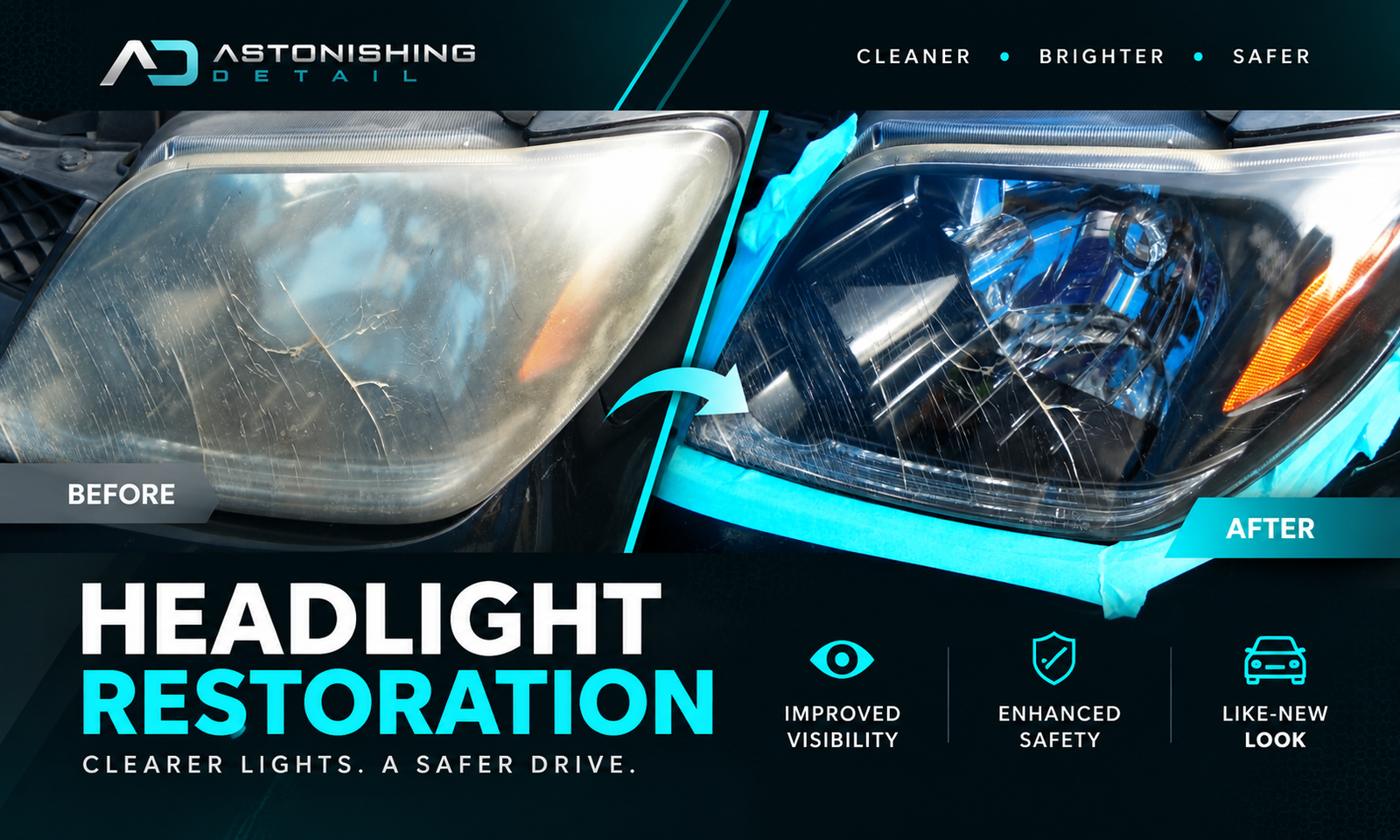
Cloudy, yellow, or hazy headlights are common as vehicles age. UV exposure, oxidation, road debris, and weather can damage the outer plastic lens, reducing clarity and potentially affecting light output.
The good news is that many headlights can be restored without replacing the entire assembly.
What Is the Best Method to Restore Headlights?
The most effective method for moderately or heavily oxidized headlights is:
- Clean the headlight thoroughly.
- Mask the surrounding paint.
- Wet-sand the oxidized surface with progressively finer sandpaper.
- Polish the lens until it becomes clear.
- Clean and degrease the surface.
- Apply a UV-resistant protective coating.
The final protection step is important because UV exposure is one of the main causes of headlight deterioration.
| Method | Result | Long-Term? |
|---|---|---|
| WD-40 | Temporary shine | No |
| Coca-Cola | Limited cleaning | No |
| Toothpaste | Helps light oxidation | No |
| Headlight polish | Good for light haze | Sometimes |
| Sand + polish | Restores heavy oxidation | Needs protection |
| Sand + polish + UV protection | Best overall process | More durable |
Does WD-40 Really Clean Headlights?
WD-40 can temporarily make headlights appear clearer because it leaves a film on the surface. However, it does not remove deep oxidation or restore the damaged UV protection.
For serious oxidation, proper sanding, polishing, and UV protection are a better solution.
Can Coca-Cola Clean Headlights?
Coca-Cola is a popular DIY headlight-cleaning trick, but it is not a proper restoration method. It may help loosen surface dirt, but it will not remove significant oxidation or provide UV protection.
Does the Toothpaste Trick Work on Headlights?
Yes, toothpaste can improve lightly hazed headlights because its mild abrasives can remove some surface oxidation.
However, it is only a temporary DIY solution. Toothpaste does not provide the UV protection needed after restoration.
For heavily yellowed headlights, sanding, polishing, and UV protection will provide a more complete restoration.
How to Clean Yellow Headlights at Home
For light oxidation, you can try a dedicated headlight polish or restoration kit.
For heavier oxidation:
- Wash the lens.
- Mask the surrounding area.
- Wet-sand the lens.
- Use progressively finer abrasives.
- Polish until clear.
- Remove residue.
- Apply UV protection.
Avoid using unnecessarily aggressive sandpaper, and don’t skip the protection step.
How Long Does Headlight Restoration Last?
The lifespan depends on the restoration method, UV exposure, climate, and maintenance. Some DIY restorations may begin showing haze again within a year, while a properly protected restoration can last longer.
When Should Headlights Be Replaced?
Restoration may not solve headlights with:
- Cracked lenses
- Severe internal damage
- Internal moisture
- Damaged reflectors
- Extensive deterioration
In these situations, replacing the headlight assembly may be necessary.
Frequently Asked Questions
What is the best headlight restoration method?
Wet sanding, polishing, and applying UV protection is generally the most complete method for heavily oxidized headlights.
Can toothpaste restore headlights?
It can improve light oxidation temporarily, but it is not a long-term restoration solution.
Does WD-40 remove yellowing?
No. It may temporarily change the appearance, but it does not properly remove oxidation.
Can Coca-Cola restore headlights?
No. It is not a substitute for proper headlight restoration.
Can I polish headlights without sanding?
Yes. Light haze can often be improved with a suitable headlight or plastic polish. Heavy oxidation usually requires sanding first.
How can I prevent headlights from turning yellow again?
Keep the lenses clean and maintain a quality UV-resistant protective layer after restoration.
Final Takeaway
If your headlights are slightly hazy, polishing may be enough. If they are heavily yellow or oxidized, the better approach is to sand, polish, and protect them with a UV-resistant coating.
DIY tricks such as toothpaste, WD-40, and Coca-Cola may provide temporary results, but they do not replace a proper headlight restoration process.
Clear headlights look better, improve visibility, and help keep your vehicle looking well maintained.