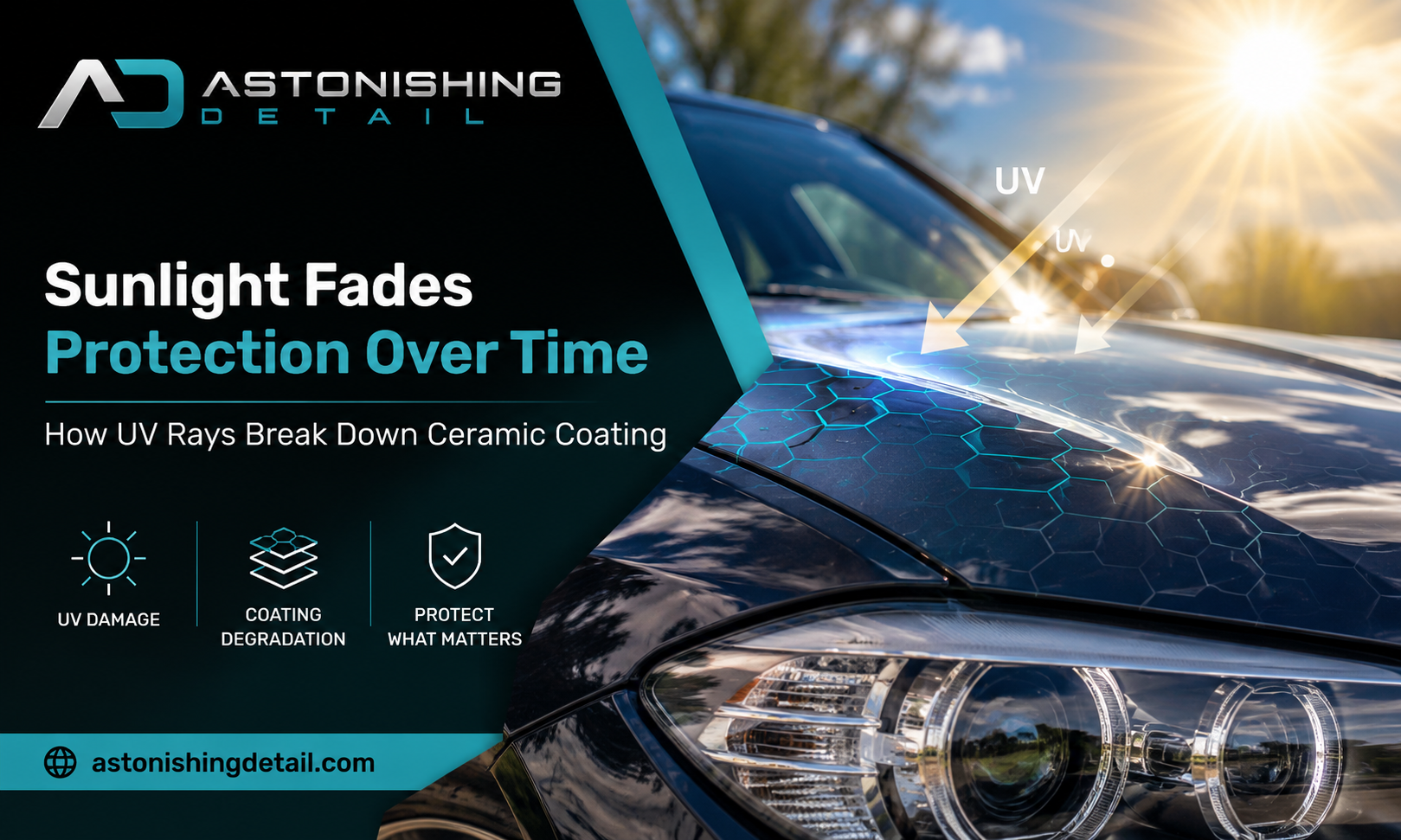
Ceramic coating is one of the best investments you can make to protect your vehicle’s paint. It adds gloss, resists contaminants, and makes washing easier. But many car owners assume ceramic coating is permanent. The truth is that even the highest-quality coating slowly degrades especially when exposed to constant sunlight.
At Astonishing Detail, we regularly inspect coated vehicles throughout Henrico and Richmond and often see the effects of long-term UV exposure. Understanding how sunlight affects ceramic coating can help you protect your investment and keep your vehicle looking its best for years.
Why Sunlight Is a Major Threat to Ceramic Coating
Ceramic coatings are designed to resist UV rays better than traditional waxes or sealants, but they are not immune to damage. Sunlight attacks the coating in three primary ways:
1. UV Radiation
Ultraviolet rays gradually break down the chemical structure of the coating. This process weakens the protective layer and reduces its ability to repel water, dirt, and contaminants.
2. Heat Stress
Vehicles parked in direct sunlight can reach extremely high surface temperatures. Repeated heating and cooling cycles cause the coating to expand and contract, which accelerates wear over time.
3. Oxidation
UV exposure promotes oxidation of the coating and the paint beneath it. As oxidation progresses, the coating becomes less effective and the paint may begin to lose depth and clarity.
How Ceramic Coating Degrades Over Time
The aging process is usually gradual. Most drivers won’t notice a sudden failure, but several warning signs appear as the coating deteriorates.
| Coating Condition | What You’ll Notice |
|---|---|
| New coating | Strong water beading, deep gloss, easy cleaning |
| Early UV wear | Slightly reduced slickness and water behavior |
| Moderate degradation | Water begins to sheet instead of bead, gloss fades |
| Advanced degradation | Coating loses protection, contaminants stick more easily |
| Near failure | Paint behaves like an uncoated surface |
Common Signs Sunlight Is Damaging Your Coating
- Water no longer beads tightly.
- The surface feels rougher after washing.
- Gloss appears duller than before.
- Water spots become harder to remove.
- The vehicle gets dirty more quickly.
- Paint looks less reflective in direct sunlight.
If you notice several of these symptoms, your coating may be approaching the end of its effective lifespan.
How Long Can Ceramic Coating Survive in the Sun?
Longevity depends on the coating quality, installation, maintenance, and how much sun exposure the vehicle receives.
| Driving & Parking Conditions | Expected Coating Life |
|---|---|
| Garage-kept vehicle | 5–7+ years |
| Mixed garage and outdoor parking | 3–5 years |
| Mostly outdoor parking | 2–4 years |
| Constant sun exposure | 1–3 years |
In Virginia’s climate, vehicles that sit outside daily often experience faster coating degradation than garage-kept vehicles.
Can Ceramic Coating Prevent UV Damage Completely?
No. Ceramic coating significantly reduces UV damage, but it cannot stop it entirely. Think of it as sunscreen for your vehicle: it slows the aging process and provides a sacrificial layer that takes the abuse instead of your paint.
This is why ceramic coating is still one of the best protective options available—it helps preserve the factory finish much longer than leaving the paint unprotected.
How to Protect Ceramic Coating From Sun Damage
Park in the Shade Whenever Possible
Reducing direct sun exposure is the single most effective way to extend coating life.
Wash the Vehicle Regularly
Contaminants left on the surface can bake into the coating under sunlight and accelerate degradation.
Use pH-Neutral Wash Products
Harsh chemicals can weaken the coating and make UV damage worse.
Apply a Ceramic Maintenance Spray
Periodic maintenance products help refresh hydrophobic performance and add an extra layer of protection.
Schedule Annual Inspections
Professional inspections can identify early signs of coating wear before protection is significantly reduced.
The Difference Between Coating Failure and Paint Damage
One important point: a failing ceramic coating does not necessarily mean your paint is damaged.
In many cases, the coating has sacrificed itself to protect the paint underneath. A professional detailer can often remove remaining coating residue, correct any minor imperfections, and apply a fresh protective layer.
Why Professional Maintenance Matters
At Astonishing Detail, we specialize in ceramic coating, paint correction, and long-term vehicle protection for drivers in Henrico and Richmond. Regular maintenance helps:
- Restore water-beading performance
- Remove embedded contaminants
- Prevent premature coating failure
- Keep the finish glossy and easier to clean
- Extend the overall life of the coating
Final Thoughts
Sunlight is one of the biggest enemies of ceramic coating. UV rays, heat, and oxidation slowly break down the protective layer, reducing its gloss and hydrophobic performance over time.
The good news is that proper care can dramatically extend coating life. Shade, routine washing, maintenance products, and professional inspections all help keep your ceramic coating performing at its best.
If your coating no longer beads water like it used to or your vehicle’s shine has started to fade, it may be time for a professional evaluation and maintenance service.
FAQs
Does ceramic coating protect against UV rays?
Yes. Ceramic coating helps reduce UV damage and slows paint oxidation, but it does not block UV exposure completely.
Why does my ceramic coating stop beading water?
Water beading decreases as the coating becomes contaminated, worn, or degraded by UV exposure and heat.
Can a faded ceramic coating be restored?
In many cases, yes. A professional maintenance service can remove contamination and restore some performance. Severely degraded coatings may need to be replaced.
How often should ceramic coating be maintained?
Most professionally installed coatings benefit from annual maintenance inspections and periodic maintenance washes.
Is ceramic coating worth it if my car stays outside?
Absolutely. Even on outdoor vehicles, ceramic coating provides significantly better protection against UV rays, contamination, and oxidation than leaving the paint unprotected.